PSYA

PSYA Hypnosis

Explore hypnosis through language, attention and interaction

PSYA Hypnosis brings seven programme sections together as one standalone method, from types of hypnosis and signs of trance to verbal, stage, nonverbal and energetic approaches. You study approaches to trance induction, practise with another participant with their consent and receive feedback from the instructor.

In English · Five 2-hour sessions · 10 hours in total · In person or online · Keep your PDF indefinitely

View training at PSYA School

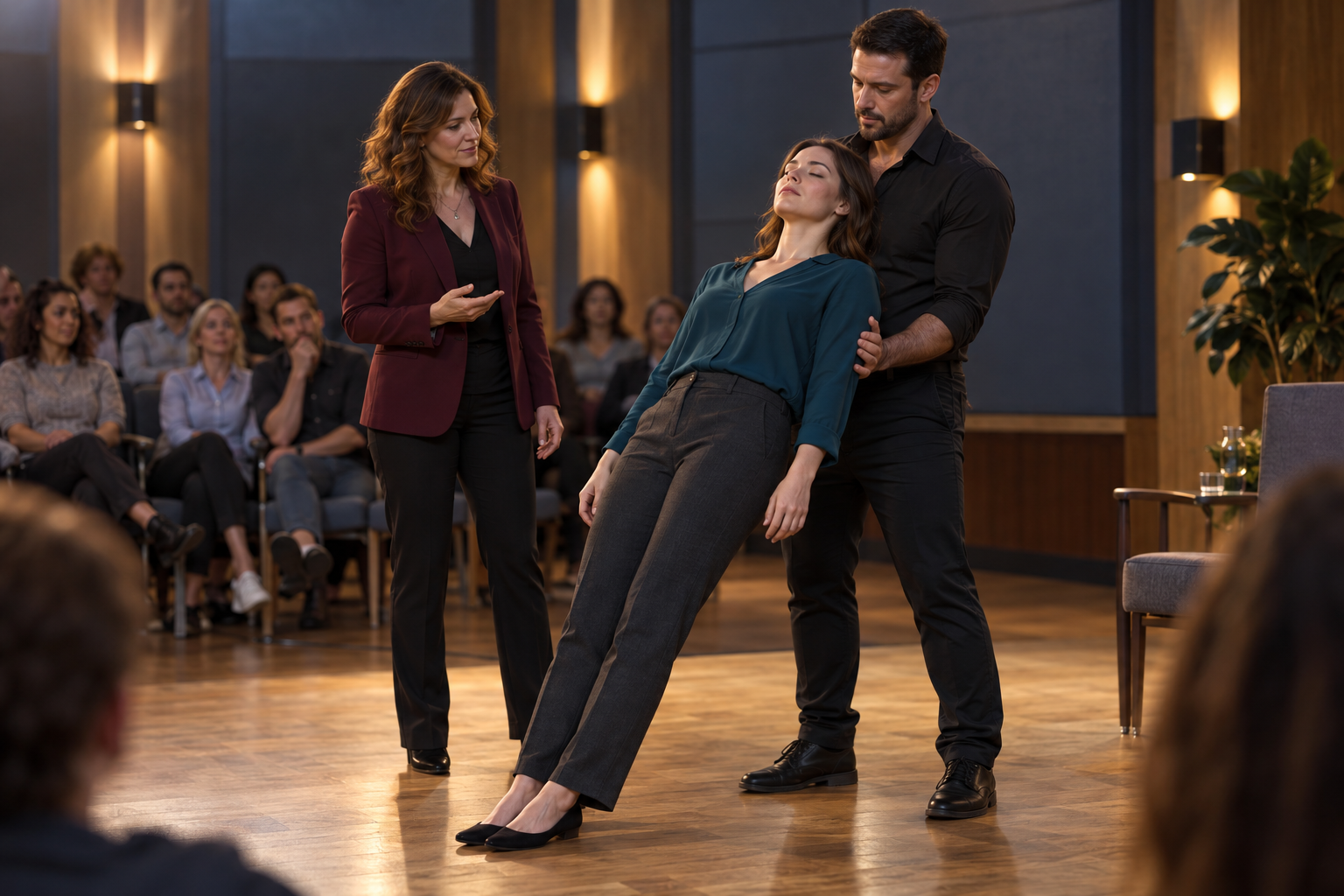
Staged hypnosis illustration: a participant leans backward while an assistant supports her

Why study this method

You are interested in understanding how attention, suggestion, contact and a person's subjective state are approached in hypnosis. You would like to become familiar with different approaches and see how verbal interaction differs from nonverbal and demonstration-based methods.

The PSYA programme brings these approaches together in one training. You explore their purpose and application, become familiar with trance induction topics and discuss your experience of consensual training practice with the instructor.

How the approach is described

The training covers types of hypnosis, hypnotizability tests, signs of trance and rapport. It then explores language patterns and imagery, demonstration phenomena, nonverbal signals and energetic hypnosis in the PSYA model.

The energetic approach is described through the operator's state, energy centres and Presence. This is an author's model, rather than an established physical mechanism. Learning goals do not guarantee the same outcome or speed of trance induction for every person. You study ways of applying the method during the sessions and through the training PDF.

Artistic stage hypnosis illustration: an astonished participant gathers imaginary glowing mushrooms

What the single method includes

Types of hypnosis and their applications

You become familiar with the characteristics of different types of hypnosis, their differences and the purposes of their application. This overview helps relate the other sections of the single programme to their educational purpose.

Hypnotizability tests and signs of trance

You explore hypnotizability tests and observable signs of trance. You become familiar with receptiveness to hypnosis and the concept of neuroplasticity in the programme's description.

Rapport — neural coordination

The programme describes rapport through the quality of interaction, trust and establishing contact. You become familiar with sensory information transfer, meaning processing, mutual anticipation and regulation of responses, alongside the role of perception and attention.

Verbal hypnosis

You study verbal approaches to focusing attention and suggestion. The programme considers subjective perception, emotional tension, habitual responses, concentration and new patterns of behaviour. Learning topics include inductions through imagery and language patterns.

Stage hypnosis

You become familiar with the demonstration form of hypnosis, stage phenomena and audience interaction. Light-based and shock inductions are named as programme topics; their sequences are not disclosed on this page.

Nonverbal hypnosis

You explore gaze, gestures, movements and distance as nonverbal signals for focusing attention and working with subjective states. The programme includes fascination, image projection and trance induction through triggers. These topics are related to deepening rapport and interaction without direct verbal suggestions.

Energetic hypnosis

You become familiar with the author's concept of trance induction through managing the operator's energy. Learning topics include changes in the operator's states, energy centres and Presence. In the PSYA model, they are considered in relation to attention, rapport, and emotional and bodily states.

What the training focuses on

  • Differences between types of hypnosis and the purposes of their application.
  • Hypnotizability, signs of trance and the quality of rapport.
  • Verbal, demonstration-based and nonverbal approaches in the programme.
  • Energetic hypnosis as an author's model within PSYA.
  • Practice with another participant with their consent and instructor feedback.

All seven sections belong to the single PSYA Hypnosis method. The step-by-step instructions remain in your PDF.

What learning outcomes the programme describes

The programme highlights new knowledge about hypnosis, improving its application and learning approaches to trance induction. You study ideas about mental processes during induction and topics related to developing concentration, influence, clarity and will.

During the sessions, you become familiar with these directions and try training practice. You can discuss your experience with the instructor and receive feedback on applying the method.

Two adult participants sit facing each other and maintain eye contact in a bright studio

Who this training is for

The source description addresses beginners and specialists who work with people. It names no separate mandatory prerequisite technique.

For those who want to study hypnosis for their own development and for later application with other people with their consent under PSYA's training terms. The training is not presented as a professional licence or clinical qualification.

How the training works

Five 2-hour sessions, 10 hours in total, in person or online. You study the single method with all seven sections, practise with another participant with their consent and receive feedback from the instructor.

Rapport is included as the section Rapport — neural coordination. Training is in English.

What participation includes

  • Five 2-hour sessions: 10 hours in total, in person or online.
  • All seven sections of the single PSYA Hypnosis method.
  • Practice with another participant and feedback from the instructor.
  • A PDF with step-by-step instructions for the method, which you keep indefinitely.
  • Completion through participation, without a separate skills assessment.

After completing training in this method, you may apply it independently with other people with their consent under PSYA's training terms.

The training does not grant permission to teach PSYA Hypnosis to other people.

Frequently asked questions

Is the programme suitable for beginners?

The source description addresses beginners and specialists who work with people. It does not state a requirement to complete another technique first.

How long is the training, and where does it take place?

Five 2-hour sessions, 10 hours in total. You can take part in person or online.

What do I keep after training?

A PDF with step-by-step instructions for this method. You keep it indefinitely.

Is rapport included, and how are the seven sections connected?

Rapport is included as one of the seven sections of the single PSYA Hypnosis method. All sections are studied within one programme.

Can I apply the method with other people or teach it?

After training, you may apply the method independently with other people with their consent under PSYA's training terms. The training does not grant permission to teach the method.

Is trance induction within 2–3 minutes guaranteed?

No. The source description names 2–3 minutes as a learning aim. This does not guarantee the same speed for every participant or the person they practise with.

Next step

Would you like to explore hypnosis through language, attention and interaction within a single PSYA programme? View the training information at PSYA School.

View training at PSYA School